Resources Estate Resources Selling Firearms During Estate Settlement
Selling Firearms During Estate Settlement
In some estates, firearms may ultimately be sold rather than distributed to heirs. This may occur when beneficiaries decline the items or when the estate needs to convert assets to cash.
Executors should understand the considerations involved before selling firearms as part of the estate settlement process.
Quick Summary
- Firearms may be sold when heirs do not wish to retain them.
- Sales may also occur when estates need to convert assets to cash.
- All firearm sales must still comply with applicable transfer laws.
- Executors should document the method of sale and the final transaction.
- Licensed dealers may assist with estate firearm sales.
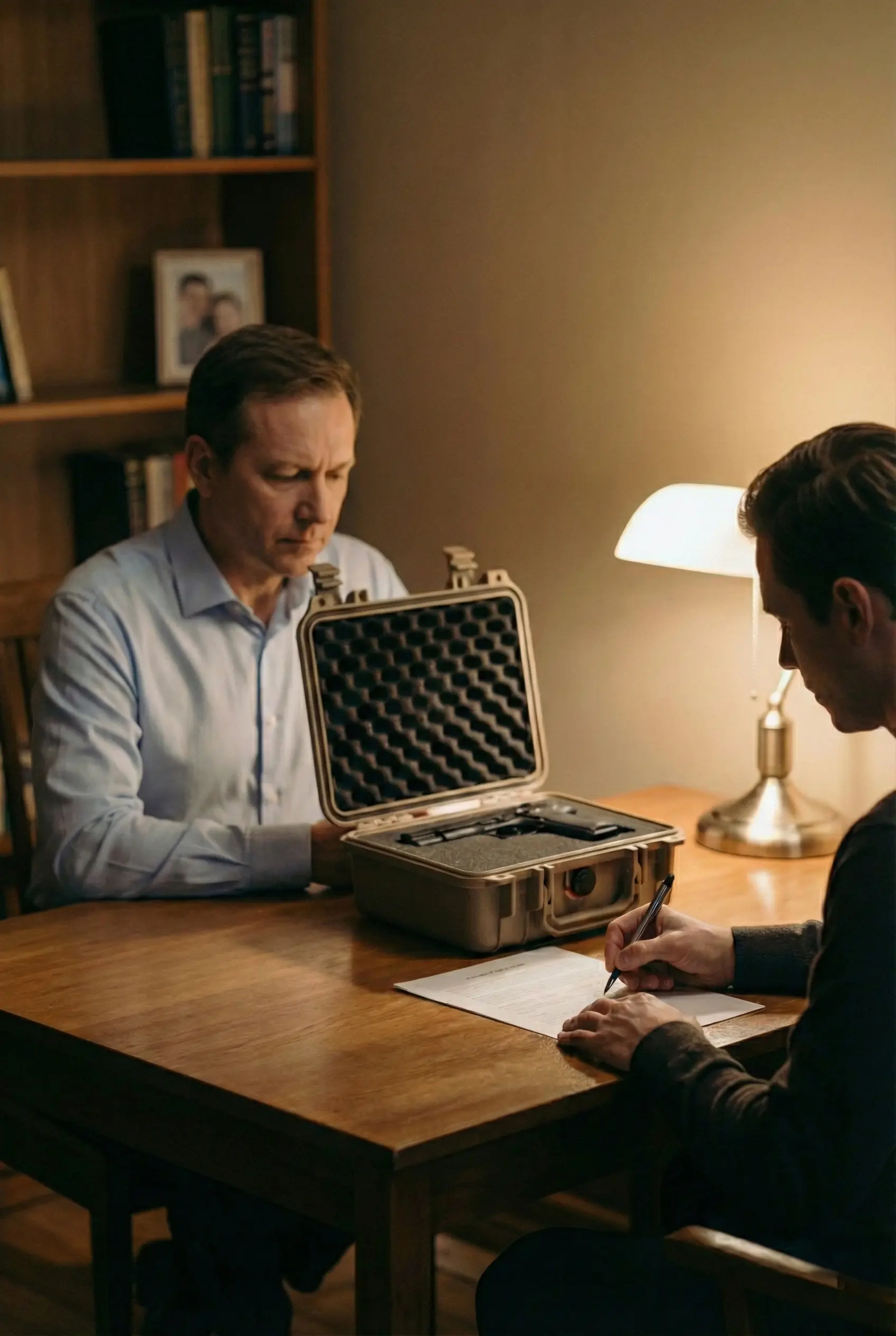
Estate disposition
When firearms may be sold
In many estates, firearms are distributed directly to heirs. In other situations, selling the firearms may be the most practical option.
This may occur when heirs decline to receive the firearms, when the estate must divide assets evenly, or when the estate needs to convert property into cash.
Executors should first confirm that selling the firearms aligns with the estate plan and the instructions contained in the will or trust.
- Heirs decline the firearms
- Declined assets
- Estate requires cash distribution
- Liquidation
- Assets must be divided among heirs
- Division
- Firearms cannot easily be distributed
- Disposition
Options for selling estate firearms
Several approaches may be available when selling firearms from an estate.
The appropriate method may depend on the size of the collection, the types of firearms involved, and the executor’s ability to manage the process.
- Selling to a licensed dealer
- Consignment through a firearms retailer
- Auction through a licensed auction house
- Private sale conducted through a lawful transfer process
Executor Tip
If the estate includes a large collection, working with a professional may simplify the sale process.
Legal considerations when selling firearms
Firearm sales during estate administration must still comply with applicable federal and state transfer laws.
Executors should ensure that any sale follows the proper transfer process and that the buyer is able to receive the firearm lawfully.
- Licensed dealer transfers
- State firearm regulations
- Buyer eligibility
- Documentation of the transaction

Recordkeeping
Document firearm sales for estate accounting
Executors should maintain records of firearm sales as part of the estate documentation.
These records support estate accounting and help confirm how the estate’s assets were distributed or liquidated.
- Inventory reference
- Record which firearm was sold.
- Sale documentation
- Maintain receipts or transaction records.
- Transfer documentation
- Keep dealer paperwork or transfer records.
- Estate records
- Store sale records with other estate materials.
Planning firearm sales during estate administration
When firearms must be sold, planning the process early can help prevent delays during estate settlement.
A clear plan helps ensure firearms are sold lawfully and that the estate’s records remain accurate.
Frequently asked questions
- Can firearms be sold during estate administration?
-
Yes. In some estates firearms may be sold as part of the asset liquidation process or when heirs do not wish to retain them.
- Why might firearms be sold during estate settlement?
-
Firearms may be sold when heirs decline to receive them, when the estate needs to convert assets to cash, or when distribution among heirs would otherwise be difficult.
- Do firearm sales during an estate still need to follow legal transfer requirements?
-
Yes. Even when firearms are sold by an estate, the transaction must comply with applicable federal and state transfer laws.
- Should firearm sales be documented for estate records?
-
Executors should keep records of firearm sales, including the method of sale and any supporting documentation.
- Can firearms be sold to a licensed dealer during estate administration?
-
Yes. Licensed dealers may purchase firearms from estates in some situations, which can simplify the process of liquidating assets.
Additional estate firearm resources
Executors administering estates that include firearms can review additional guidance in the Estate Firearms Resource Center, which includes articles, checklists, and reference materials.
