
How We Compare
We Buy Guns vs private sales: comparing two ways to sell a firearm
Selling a firearm privately can seem straightforward at first. In some cases, it is. In others, it introduces legal, safety, and payment risks that many sellers don’t fully consider until they are already in the process. One aproach is built around predictability and compliance. The other places most of the responsibility directly on the seller.
If you’re unsure what your firearm might sell for, you can start by checking our valuation guides.
What do we mean by a private sale?
A private sale typically means selling a firearm directly to another individual rather than to a licensed buyer or business. This might happen through:
- Online classifieds or forums
- Social media groups
- Local listings
- Personal connections
At-a-glance comparison
| WeBuyGuns.com | Private Sale | |
|---|---|---|
| Who buys my firearm? | Licensed buyers | Another individual |
| Time to payment | Predictable | Varies |
| Price certainty | Clear offer | Negotiated |
| Legal compliance | Handled through licensed process | Seller-managed |
| Shipping & paperwork | Guided and documented | Seller's responsibility |
| Risk exposure | Limited | High |
| Best for | Sellers who want certainty | Sellers who want full control |
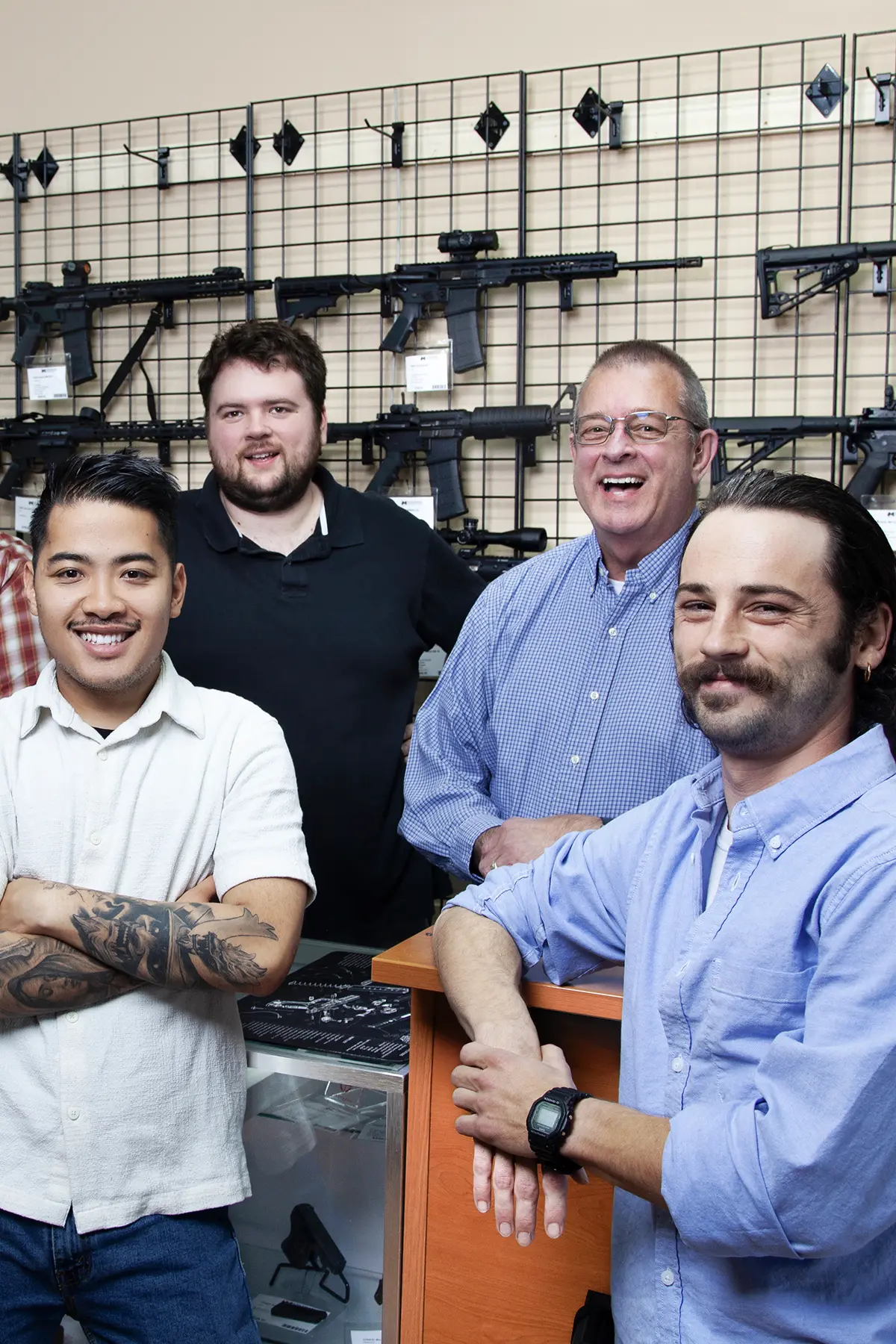
Our process
How selling through We Buy Guns works
Selling a firearm can seem complicated. Our process is designed to reduce uncertainty:
- Tell us what you’re selling so our team can evaluate it for market demand and compliance.
- Submit your firearm details online
- We review your submission and issue a documented purchase offer. What you see is what you are paid, there are no additional or hidden fees.
- Receive a fair market offer
- We provide a prepaid shipping label and clear instructions for packaging and sending your firearm safely and legally.
- Ship using provided instructions
- Most sellers are paid within 24 hours after inspection and verification.
- Get paid after inspection
- Our team is available to answer questions and help at any point.
- Dedicated Support
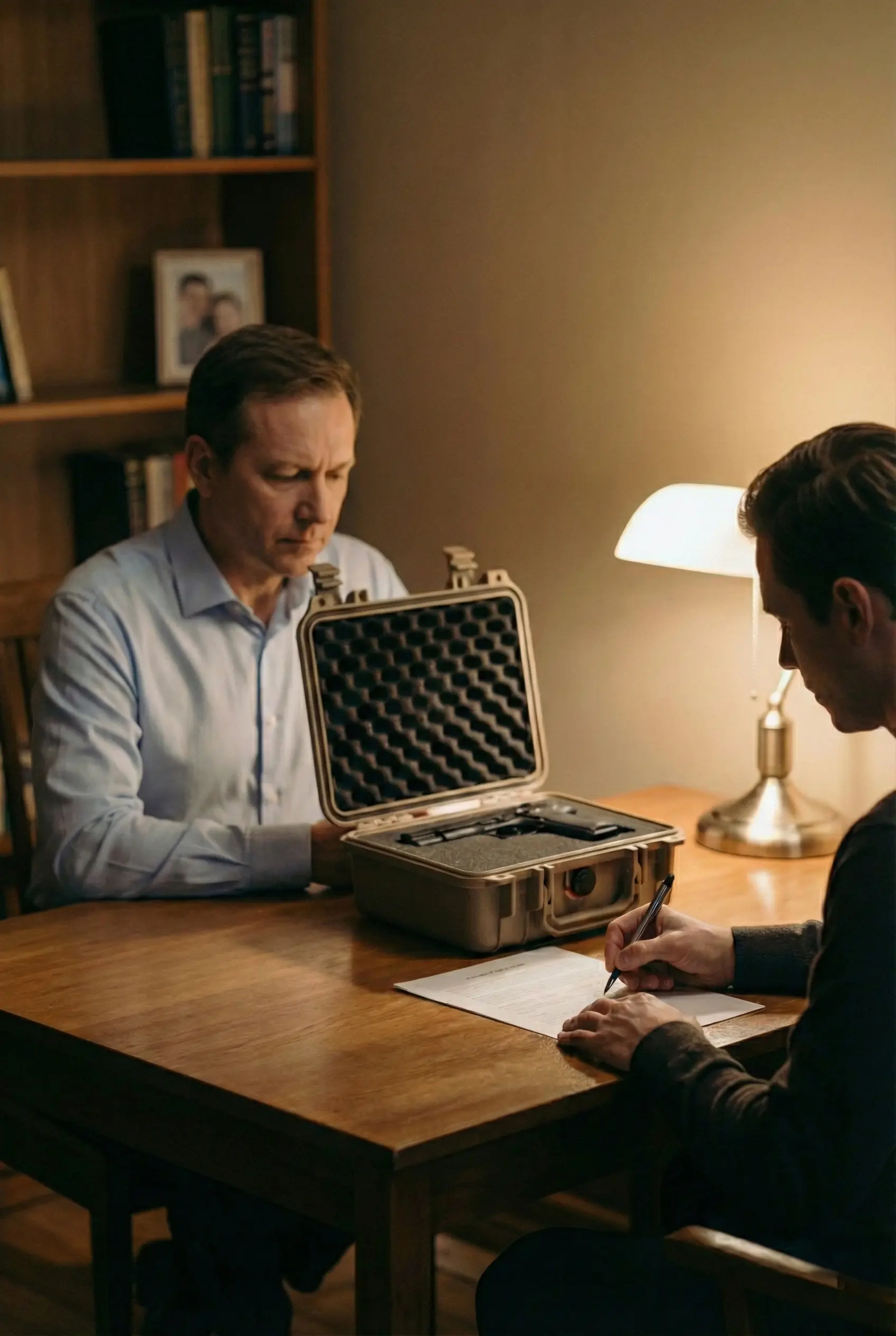
The alternative
How a private sale typically works
In a private sale, the seller is responsible for nearly every part of the transaction:
- The seller must locate an interested buyer, often through classifieds, online forums, social media groups, or personal networks. This may involve screening inquiries, answering questions, and filtering out non-serious prospects.
- Finding a buyer
- Private sales typically require direct negotiation. Offers may change, buyers may counter, and agreements can fall through before the transaction is completed.
- Negotiating price
- Depending on location, the seller may need to confirm that the buyer is legally eligible to possess the firearm. This can include verifying residency, identification, or arranging transfer through a licensed intermediary.
- Verifying eligibility
- Firearm transfer laws vary widely across states and sometimes at the local level. Requirements may differ regarding background checks, documentation, or where a transfer must occur. The seller is generally responsible for understanding and complying with those rules.
- Understanding local and state laws
- Payment arrangements are handled directly between individuals. Sellers must decide how to accept funds, confirm payment security, and determine when to transfer possession of the firearm.
- Coordinating payment
Key differences that matter in practice
-
With a private sale, compliance obligations often fall entirely on the seller. This can include verifying residency, eligibility, and transfer requirements depending on location.
We Buy Guns operates through licensed buyers and established compliance procedures, reducing the burden on the individual seller.
- Legal Responsibility
-
Private sales frequently involve meeting unknown individuals to exchange a regulated item.
Selling through We Buy Guns avoids in-person meetings and removes direct interaction with unknown buyers.
- Personal Safety Considerations
-
Private sales can involve cash, checks, or digital payments. Transactions may fall through or require multiple negotiations.
We Buy Guns provides a defined payment timeline after receipt and inspection.
- Payment Certainty
-
Private sales require active management at every step. That may include listing, messaging, scheduling, and coordination.
We Buy Guns is structured as a single, guided transaction rather than an open-ended process.
- Time & Effort
When a private sale might make sense
A private sale may be appropriate if:
- You already know and trust the buyer
- You understand your local firearm laws
- You are comfortable managing transfer details
- You are willing to accept added responsibility
If you are selling multiple firearms from an inherited estate or a gun collection, a structured process can reduce the back-and-forth.
Why many sellers choose we Buy guns instead
Sellers often choose We Buy Guns because it offers:
- ✓ A nationwide network of licensed buyers
- ✓ Clear offers instead of ongoing negotiation
- ✓ Documented compliance procedures
- ✓ A structured timeline
We’re a federally licensed firearms dealer offering secure transactions, free shipping and fast payment.
Frequently asked questions
- Is selling my firearm to WeBuyGuns.com legal?
-
Yes. We are a federally licensed firearms dealer located in the state of Indiana. You, the seller, are covered under our license just as you would be if you walked into our store. There are no laws preventing you from selling your firearm to us. If the process seems daunting, just give us a call at (317) 804-8713 and we'll walk you through it.
- Are private firearm sales legal?
-
Laws vary by state and locality. Sellers are responsible for ensuring compliance with applicable regulations.
View our State Legal Guides for specific guidance.
- Is a private sale likely to get a higher price?
-
Sometimes, but outcomes vary widely and are not guaranteed.
- Who is responsible if something goes wrong in a private sale?
-
In most cases, responsibility rests with the seller.
- Can firearms be shipped in a private sale?
-
Shipping regulations can be complex and often involve licensed intermediaries depending on state and federal law.
How We Buy Guns compares to other ways to sell
See the pros and cons of using a licensed national gun buyer versus your other options.
Private Sale
Compare a private buyer sale with a licensed, guided process. See how pricing, compliance responsibility, safety, and time to payment typically differ.
Auction Companies
Compare consignment-style auctions with a direct purchase offer. Review timelines, seller fees, reserve risk, payout timing, and how predictable each option feels.
GunBroker
Understand the tradeoffs between listing on GunBroker and selling to a licensed buyer. Compare fees, timelines, buyer screening, shipping steps, and price certainty.
Consignement
Consignment can bring exposure but often takes time. Compare payout timing, pricing control, seller fees, paperwork, and what happens if the item does not sell.
Gun Shops
Selling to a local gun shop can be convenient depending on inventory needs. Compare offers, timing, paperwork, negotiation, and how the experience differs from a guided online sale.
Pawn Shops
Pawn shops are fast but pricing can vary widely. Compare speed, offer structure, documentation, negotiation, and how each route handles compliance and payment.
Start your secure, compliant sale today
If you are still weighing your options, reviewing a clear market offer can help clarify your decision.